Bulky goods from a UK supplier: what to check before you buy and arrange transport
What a business should check before buying heavy or bulky goods in the UK: packed dimensions, weight, handling equipment, access, customs documents and unloading in Lithuania.


Found a large or heavy item at a UK supplier? It's worth assessing transport before you pay. The exact weight, final packed dimensions, loading equipment and delivery conditions can change the whole transport plan.
If a company has found a heavy or bulky item in the UK – equipment, furniture, building materials, an engine or another non-standard product – it's worth assessing transport before paying for the purchase. The biggest hitches usually come to light not at customs but when the supplier can't give an exact weight, has no suitable handling equipment or a lorry can't reach the loading point.
Before buying, ask for transport details, not product details
A seller's listing or spec sheet often gives the dimensions of the product itself, but transport needs the final dimensions of the packed freight. Ask the supplier for the length, width, height, total weight and type of packaging.
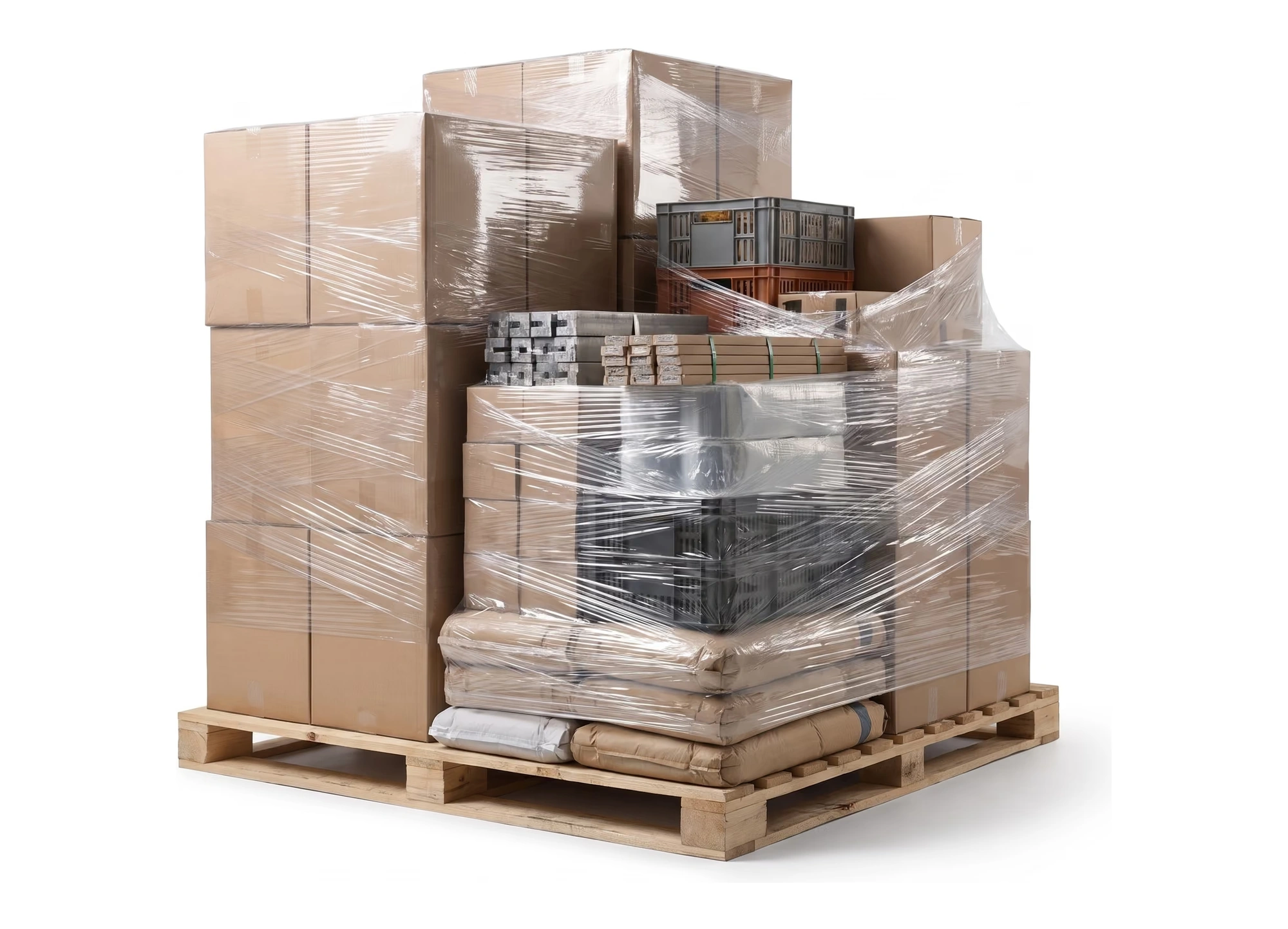
If the goods are on a pallet, you need to know the actual pallet weight and whether it can be stacked on. If it's machinery, a machine tool or an engine, it helps to get photos from several angles and information about lifting points.
Ask how the supplier will load the freight
“Collection available” doesn't mean loading onto the vehicle is included. Before booking, ask clearly whether the supplier has a forklift, loading dock, crane or other equipment needed.
For example, a 1.2 t pallet of tiles can't be treated like a light flat-pack furniture box. If there's no suitable equipment on site, Krovanta can look at a separate handling solution, but this must be known before a vehicle is sent.
Check that the right vehicle can reach the supplier
Narrow gates, a height-restricted entrance, a residential street or a cramped industrial estate can change the whole collection plan. It's worth asking the supplier what size of vehicle usually comes to collect and exactly where loading takes place.
If the main lorry can't get in, a smaller vehicle can be planned for the first leg, with the freight later transferred to the main UK→LT lorry.
One heavy item doesn't necessarily mean a dedicated lorry
If the freight takes up only part of the vehicle, it can make sense to ship it as part-load together with other orders. But volume alone isn't enough – we assess weight, shape, floor space, whether it can be stacked on and handling conditions.
A long or non-stackable object can take up much more usable space than its volume on paper suggests. That's why a quote always needs photos and real dimensions.
For a commercial purchase in the UK, prepare documents before collection
If the goods are bought for business use, before collection it's worth having the invoice or another document supporting the value, an accurate product description, weight, quantity and any commodity code you have. A UK export declaration uses classification, value, weight, package and transport data.
When exporting from England, Scotland or Wales, a business needs a GB EORI. On the import side in Lithuania, an operator uses an EU EORI. For an additional fee, Krovanta can help arrange UK export and LT import declarations.
A UK supplier doesn't mean UK origin
If goods are bought from a British supplier, they aren't necessarily made in the United Kingdom. For customs, origin is determined by where the goods were made or sufficiently processed, not by the country they're shipped from.
This matters because origin, together with the commodity code and customs value, can affect the duty regime that applies.
Plan unloading in Lithuania before you buy
If the freight weighs a tonne or more, the problem can shift to the final address. Before buying, it's worth knowing whether the recipient has a forklift, whether a lorry can get in and whether the item needs to be carried in or just unloaded beside the vehicle.
If a lorry can't reach the final destination, a smaller vehicle can be planned for the last leg. It's best to include this in the quote from the start.
What to send Krovanta before paying for a bulky item in the UK
Send the product link or supplier quote, UK address, packed dimensions, weight, photos, information on loading equipment and the delivery address in Lithuania. If you already have an invoice or commodity code, include those too.
Based on these details we can assess whether a direct collection, part-load, extra handling or a smaller vehicle is needed. You'll find the main service on our commercial freight UK to Lithuania page.
Frequently asked questions
Answers to the most common questions about this article.


Ask for the final packed dimensions, total weight, photos and information on how the goods will be loaded onto the vehicle.
Yes. We can arrange collection directly from a supplier, manufacturer or warehouse anywhere in the United Kingdom.
We need to know before collection. A suitable handling or alternative vehicle solution will be assessed based on the weight, dimensions and site.
No. If the freight takes up only part of the vehicle and can be safely combined with other freight, the part-load model may be suitable.
No. Origin is determined by where the goods were made or sufficiently processed, not by the seller’s address.



The services we provide