Regular commercial freight from the UK to Lithuania: how to set up a weekly process
How businesses can plan recurring UK→LT freight: supplier ready dates, collections, customs documents, consolidation and delivery.

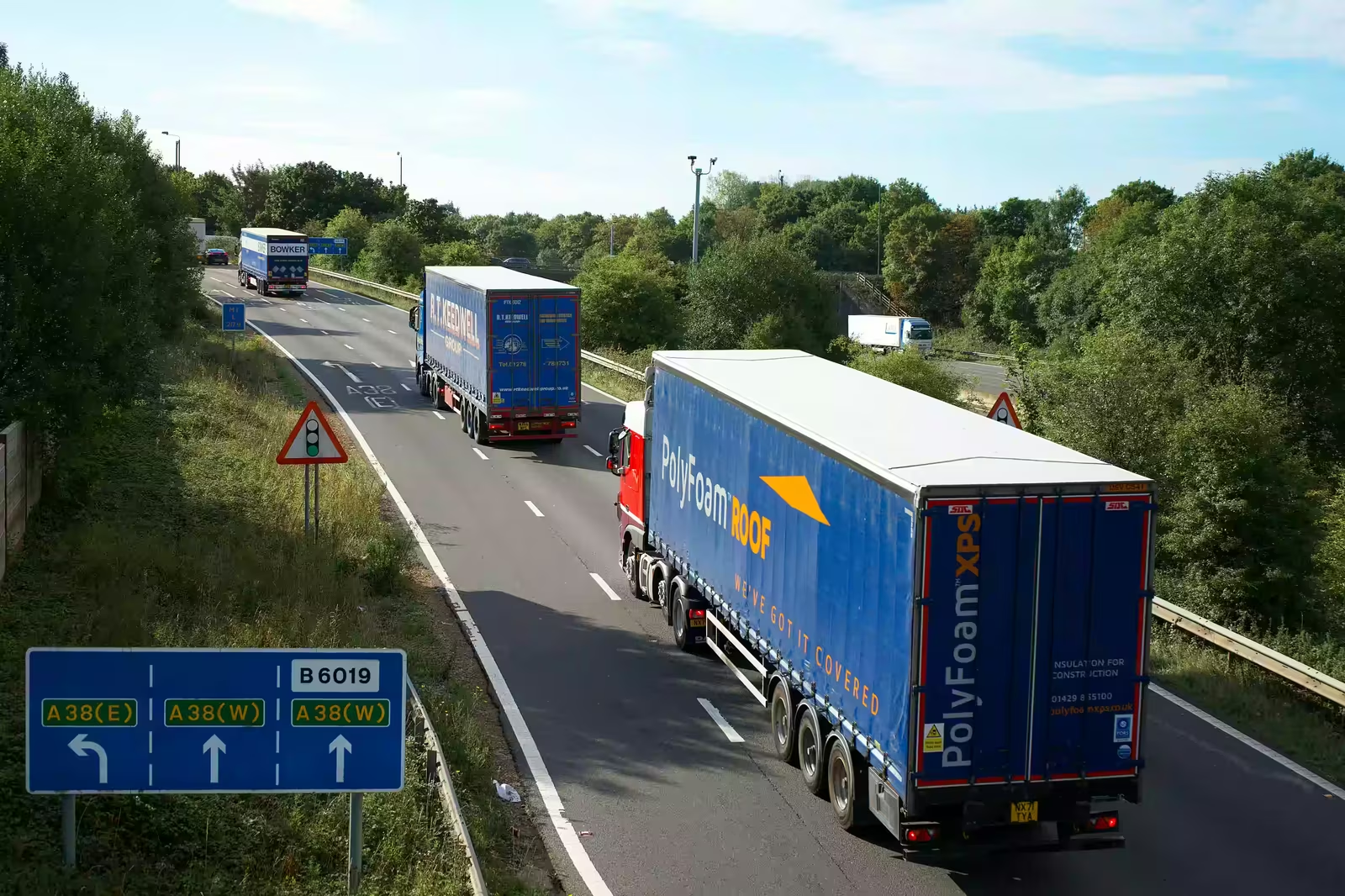
If a business buys from UK suppliers regularly, the biggest gain comes not from a one-off “fast delivery” but from a clear weekly process. The supplier knows when to have goods ready, documents are gathered in advance and transport is planned around the Thursday UK→LT run.
Regular commercial freight from the UK to Lithuania becomes simpler when you don't look for a new solution every week but agree a supply rhythm in advance. For a business, what matters isn't just the journey itself but that suppliers have goods ready on time, documents are gathered before collection and Lithuania is ready to unload.
Start with the supplier's ready date
If the main transport leaves the UK on Thursday, a supplier's promise to “have it ready by the end of the week” isn't precise enough. You need a specific date from which the goods will definitely be ready for collection, and a contact who will hand them over to the driver.
Krovanta plans collections across the UK before the main Thursday departure. The earlier the real ready date is known, the lower the risk of the freight slipping to the following week.
A standard order template saves a lot of back-and-forth
When shipping regularly, it's worth using the same data set for every order: supplier address and contact, collection reference, number of packages, dimensions, weight, photos, invoice and the planned delivery address in Lithuania.
If a load repeats, don't automatically copy the old weight or dimensions. Even the same SKU may be packed differently, so transport needs the details of that specific shipment.
Orders from several suppliers can be combined into one weekly cycle
A business doesn't need all its suppliers to be in the same city or to deliver on the same day. Krovanta can collect freight from several UK locations and, if needed, use the UK warehouse for temporary storage and consolidation.
For example, the first supplier has a pallet ready on Monday, the second two boxes on Tuesday and the third on Wednesday. If the route and timing make sense, the orders can be combined before a shared run. More: freight consolidation in a UK warehouse.
Record loading conditions as standing supplier information
If you buy from the same supplier regularly, note whether they have a forklift or loading dock, what size of vehicle can get in and what time loading takes place. That saves having to check the same conditions from scratch every time.
But if the weight or packaging of the freight changes, the handling solution needs reviewing. A 200 kg pallet and a 1.2 t pallet at the same site may need completely different equipment.
Prepare customs documents alongside the transport
Since Brexit, moving commercial goods from Great Britain to Lithuania is more than a transport booking. While the supplier is preparing the freight, it's worth gathering the invoice, product descriptions, value, commodity codes, EORI details and other information needed for declarations.
For an additional fee, Krovanta can help arrange UK export and LT import declarations. If documents are only dealt with after loading, any gap can become an unnecessary hold-up.
A more detailed list is in our commercial freight documents UK→LT guide.
Plan the final delivery in Lithuania in advance
Freight usually reaches Lithuania at the weekend and deliveries start on Monday. If the recipient is a warehouse, it's worth knowing its opening hours and unloading conditions in advance. If delivery is to a building site or another location with restricted access, you need to check whether the main vehicle can get there.
If a lorry can't get in, a smaller vehicle can be planned for the last leg. It's best to build this into the process before the UK collection.
A regular process doesn't mean every shipment is the same
A weekly rhythm helps with planning, but the weight, dimensions, shape and documents of each load still need checking. This is especially important if one week it's standard pallets and the next it's heavy equipment or long structures.
The benefit of regularity isn't autopilot but clear responsibility: the supplier knows when to be ready, the customer knows what details to provide and the carrier knows what collection to plan.
What to agree for an ongoing UK→LT flow
If you ship freight every week or several times a month, it's worth agreeing a standard order format, supplier contacts, typical handling conditions, the main delivery address in Lithuania and who is responsible for customs documents.
Krovanta can combine collection from suppliers, the UK warehouse, consolidation, main transport by lorry, handling and final delivery. Key service information is on our commercial freight UK→LT page.
Frequently asked questions
Answers to the most common questions about this article.


The main UK→LT run leaves on Thursday. Collections from suppliers are planned before the main departure according to the weekly route.
Supplier contacts and typical handling conditions can be kept as standing information, but the dimensions, weight and documents of each load need checking for every shipment.
Yes. Collections can be planned from several UK locations and, where suitable, the UK warehouse used for consolidation until a shared run.
Ideally at the same time as the supplier prepares the freight. That way any missing invoices, codes or EORI details can be sorted before collection.
The main transport usually reaches Lithuania at the weekend, and deliveries to recipients start on Monday.




The services we provide