Pallet transport from the UK to Lithuania: price, loading and documents
A practical guide to preparing a pallet for transport from the UK to Lithuania: what details we need for a price, how to plan handling and what to prepare for customs.


Got one or more pallets waiting at a UK supplier? Before booking transport, the key things to know are the exact weight, dimensions, loading conditions and whether the recipient in Lithuania can unload. Krovanta can collect pallets anywhere in the United Kingdom and plan the whole journey to the recipient.
If a pallet is already waiting at a UK supplier, the key is to answer three questions as quickly as possible: how big and heavy is it, how will it be loaded and how will it be unloaded in Lithuania? These details determine not only the price but also which collection and delivery solution can be planned.
“One pallet” isn't enough for a price
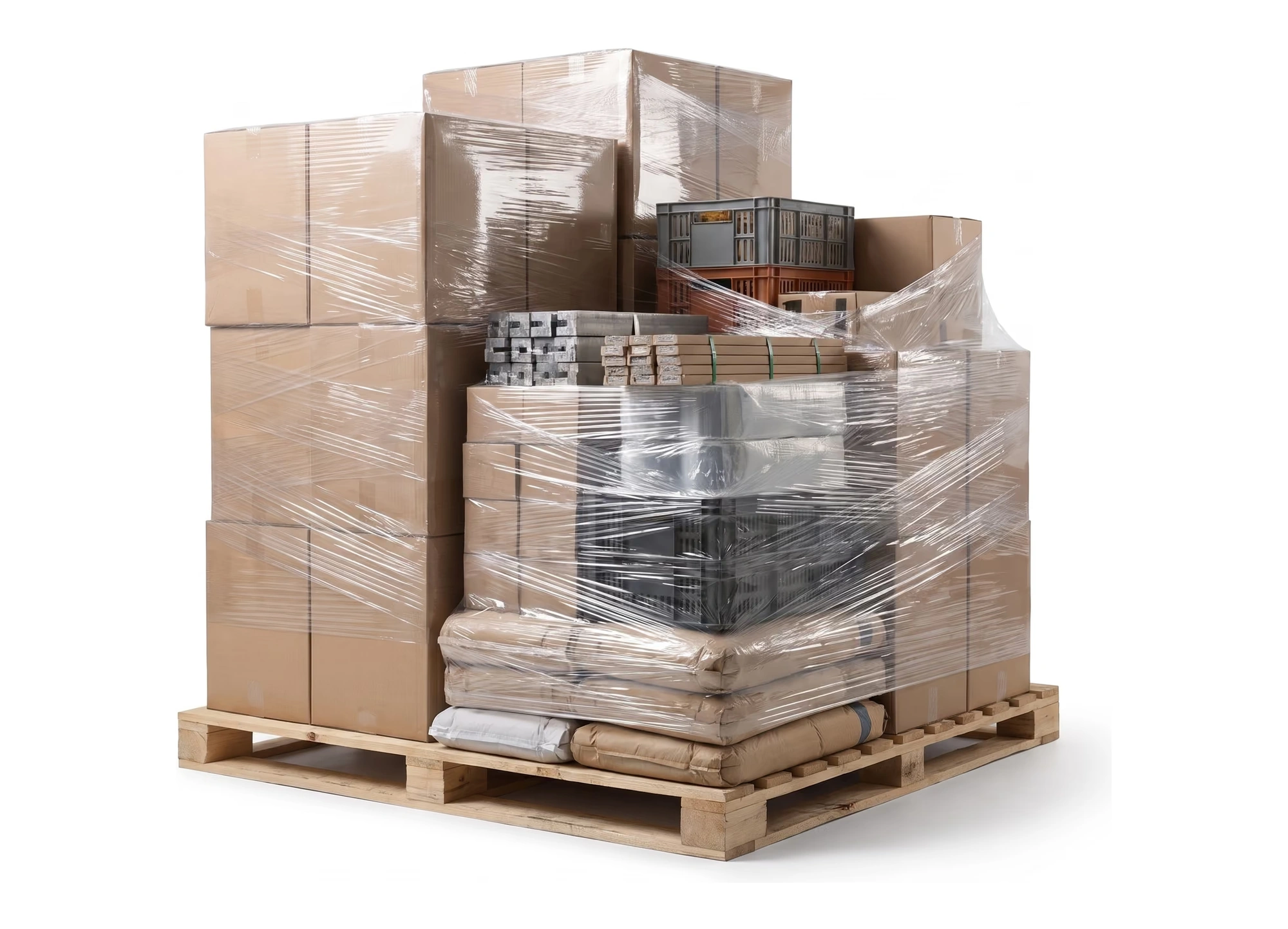
A EUR pallet of light boxes and a tonne of tiles on the same base are not the same load for transport. So before we price a quote, we ask for the external dimensions – length, width and height – the total weight, 2–3 clear photos, the UK collection address and the delivery address in Lithuania.
It's also important to say whether other freight can be stacked on the pallet. If the top is uneven or fragile, or goods overhang the pallet, the space it actually takes up in the lorry can be greater than a simple m³ calculation suggests.
Krovanta doesn't price commercial freight on volume alone. We look at weight, dimensions, shape, addresses, handling conditions and additional services. That's why a photo and an accurate weight are often more important than the description “standard pallet”.
Before collection, check how the supplier will load the pallet
A common problem arises when the customer knows the price and weight of the goods but not whether the supplier has a forklift. If, for example, a 1.2 t pallet of tiles is ready, you need to know in advance what capacity of handling equipment is on site and whether the vehicle can reach the loading point.
In some places the pallet is collected from a loading dock; in others a forklift loads it in the yard. If there's no suitable equipment, a solution has to be planned before sending a vehicle – you can't automatically assume a heavy load can be lifted with any tail lift or pallet truck.
Krovanta can arrange handling, but we need to know the real weight of the freight and the site conditions. This avoids the situation where a vehicle arrives and the collection is physically impossible.
We collect directly from the supplier, manufacturer or UK warehouse
You don't need to bring the pallet to our base yourself. We can collect freight anywhere in the United Kingdom directly from a supplier, manufacturer or warehouse. For the booking it helps to have the supplier's contact, the order or collection reference number and the date from which the goods are definitely ready for collection.
If you buy from several suppliers, we can collect from each and, where it makes economic sense, consolidate in a UK warehouse. This is useful when one supplier has a pallet ready on Monday, another only on Wednesday, and you want to send both to Lithuania together.
Plan unloading in Lithuania just as carefully as loading in the UK
If the pallet is going to a warehouse with a loading dock or forklift, the unloading scenario is clear. It's different when the recipient is a private house, a building site or a location with narrow access. In that case you need to tell us in advance whether a lorry can physically reach the address and what handling equipment is there.
If the main lorry can't reach the final destination, a smaller vehicle can be planned for the last leg. This affects the price and delivery time, so it's best to provide this information while the quote is being prepared.
The pallet must be stable before it's loaded
The UK DVSA load-securing guidance clearly distinguishes two things: the goods must be securely attached to the pallet, and the pallet itself must be properly secured in the vehicle. Simply wrapping unstable goods in film isn't always enough.
Before collection, it's worth checking that the pallet base isn't damaged, the load doesn't shift and heavier goods aren't stacked so that the centre of gravity is very high. If you're shipping an engine, machinery or other heavy equipment, a stronger custom base and additional securing may be needed.
If in doubt, send photos before the supplier finishes packing the freight. That way problems can be spotted early that would otherwise only come to light on collection day.
Since Brexit, a commercial pallet also needs customs information
Commercial goods from England, Scotland or Wales travel to Lithuania from the UK customs territory into the EU, so a transport booking alone isn't enough. You need an accurate description of the goods, value, weight, commodity code and details of the parties to the transaction. The UK exporter usually needs a GB EORI, and an operator in EU customs operations needs an EU EORI.
Important: buying goods in the UK doesn't mean they are of UK origin. Preferential duty under the EU–UK trade agreement depends on the actual origin of the goods and proof of it. We cover this in more detail in our guide commercial freight documents from the UK to Lithuania.
For an additional fee, Krovanta can help arrange UK export and LT import declarations.
When the pallet can leave for Lithuania
Krovanta's main UK→LT run leaves on Thursday. Collections from suppliers are planned before the main departure, freight usually reaches Lithuania at the weekend and deliveries to recipients run from Monday.
If the supplier can't get the freight ready by the planned collection, it's better to know in advance. If needed, the goods can be collected and held temporarily in a UK warehouse until a suitable run, rather than changing the whole route at the last minute.
What to send us before we prepare a quote
For the fastest price and a realistic collection plan, send us: the pallet dimensions, total weight, photos, collection and delivery addresses, the supplier's contact, information on loading and unloading equipment and the date from which the goods are ready.
If these are commercial goods, the invoice or another document supporting the value, a clear description of the goods and any commodity/HS code you have will also help. If you don't have everything yet, send what you know first – we'll tell you what's missing before collection based on the freight.
You'll find the full service – from collection in the UK to delivery in Lithuania – on our commercial freight page.
Frequently asked questions
Answers to the most common questions about this article.


Yes, if the delivery is agreed in advance. Alternatively, Krovanta can arrange collection directly from the supplier anywhere in the UK.
You must give the exact weight and check the lifting capacity of the loading and unloading equipment in advance. Handling for heavy freight is agreed individually.
Yes, but a non-stackable pallet may take up more usable space in the vehicle, so this needs to be stated when pricing.
Let us know before booking. A suitable unloading or last-leg delivery solution will be assessed based on the weight, dimensions and address.
You can get a provisional estimate, but the final price and loading plan will need exact external dimensions and weight.



The services we provide