UK and LT warehouses for commercial freight: when storage really helps
When an interim UK or LT warehouse helps business freight: consolidating several suppliers, short-term storage, transfers and planning the final delivery.


Storing commercial freight doesn't necessarily mean holding stock long term. Krovanta's UK and LT warehouses are mostly used as a practical part of the logistics chain – when supplier dates don't line up, several orders need consolidating or the right moment for final delivery is still to come.
Krovanta's UK and LT warehouses are useful for businesses when freight can't go straight from the supplier to the final recipient. Usually this isn't a need for a long-term fulfilment warehouse but for an interim point in the logistics chain – to consolidate several suppliers, store briefly until the main run or transfer freight before final delivery.
A warehouse is most useful when supplier dates don't line up
If one UK supplier has goods ready on Monday and another only on Wednesday, the first order doesn't have to go to Lithuania straight away. It can be held temporarily in the UK warehouse and, if the timing works, combined with the other freight before a shared departure.
That way the warehouse isn't a separate service but a way of managing your suppliers' real schedule.
Krovanta can collect from the supplier or receive their delivery
If the supplier delivers within the UK themselves, the freight can be received at a pre-agreed Krovanta warehouse. If the supplier doesn't deliver or their local transport is inconvenient, Krovanta can arrange collection from the supplier, manufacturer or warehouse anywhere in the United Kingdom.
The choice depends on the location, size and weight of the freight and the date the goods are actually ready.
Orders from several suppliers must stay clearly separated in the documents
When several orders are physically consolidated, it's important not to lose the link between each supplier and its goods. Invoices, product descriptions, values and commodity codes must be tied to specific packages or goods.
This is especially important when the same or similar products are bought from several suppliers and their origin may differ.
Receiving heavy freight at the warehouse must be agreed in advance
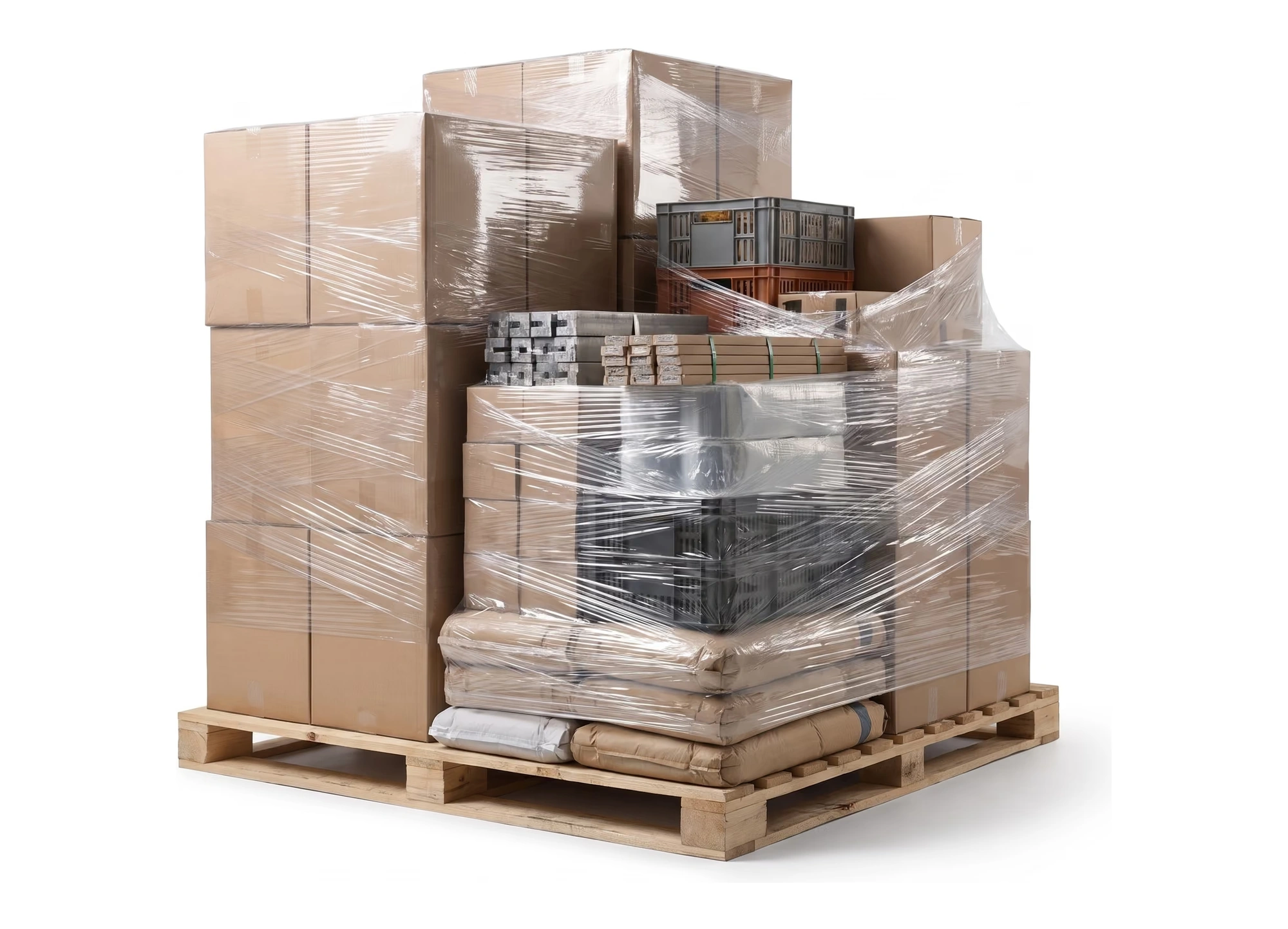
A pallet of light boxes and a 1.5 t machine are not the same scenario in a warehouse. For heavy or non-standard goods, the real weight, dimensions and photos need to be provided in advance so it's clear what unloading and transfer solution will be needed.
The seller's “pallet delivery” label alone isn't enough information for a handling plan.
An LT warehouse can help when final delivery can't happen straight away
Freight may arrive in Lithuania before the final site, the recipient's warehouse or the installation team is ready. In that case the LT warehouse can serve as an interim point until an agreed delivery.
If the final address isn't suitable for a lorry, a smaller vehicle can be planned from the warehouse for the last leg.
Warehousing doesn't replace the customs process
Commercial goods held in a UK warehouse must still be properly prepared for export from Great Britain and import into the EU. An export declaration needs the correct commodity code, value, weight, packages and other transaction and transport data.
For an additional fee, Krovanta can help arrange UK export and LT import declarations. The paperwork is best prepared while the goods are being gathered in the warehouse, not on the last day before the run.
When you don't need a warehouse
If you have a single load, the supplier has it ready on time, the customs information is in order and the final recipient is ready to receive it, an extra warehouse stage may be unnecessary. In that case it's simpler to plan a direct collection from the supplier and the main transport to Lithuania.
A warehouse should solve a specific logistics problem, not be used automatically for every load.
What to provide before planning storage
Send us each supplier's address and contact, freight dimensions, weight, number of packages or pallets, expected ready date and how long the freight may need to be stored. For non-standard freight, add photos.
If the aim is to combine orders from several suppliers, you'll find more about the process in our UK warehouse consolidation guide. The full service is on our commercial freight UK→LT page.
Frequently asked questions
Answers to the most common questions about this article.


In our UK→LT process, their main purpose is interim storage, consolidation and logistics coordination for commercial freight. Longer storage needs to be discussed for each specific load.
Yes, if the delivery is agreed in advance. If the supplier doesn’t deliver, Krovanta can arrange collection anywhere in the UK.
Yes, if the freight is suitable for shared transport and its documents are clearly linked to the specific goods and suppliers.
Only if the weight, dimensions and required unloading equipment are agreed in advance.
No. If the freight is ready on time and can go straight from the supplier to the planned run, an extra storage stage may be unnecessary.



The services we provide