The journey of commercial freight from the UK to Lithuania: from supplier to recipient
How commercial freight from the UK to Lithuania works in practice: data, collection from the supplier, consolidation, customs, the Thursday run and delivery.


The journey of commercial freight starts before the vehicle even reaches the supplier. For UK→LT transport to run smoothly, the freight details, handling, customs documents, collection and final delivery conditions all need to be agreed.
The journey of commercial freight from the UK to Lithuania doesn't begin when the lorry pulls away. Most of the work happens before collection: freight details are gathered, handling conditions agreed, customs documents checked and a decision made on whether the freight goes direct or is first consolidated in a UK warehouse.
1. We get the real freight details
For a first quote we need dimensions, weight, photos and the UK collection and LT delivery addresses. If the freight is palletised or non-standard, we need to know whether it can be stacked on and how it will be loaded.
The price and transport plan for commercial freight aren't based on m³ alone. Weight, shape, floor space, addresses, handling conditions and additional services all matter.
2. We agree the collection with the UK supplier
Krovanta can collect freight directly from a supplier, manufacturer or warehouse anywhere in the United Kingdom. Before sending a vehicle, we need the supplier's contact, collection reference, ready date and clear information about loading.
If the supplier has a heavy pallet, we check in advance that a suitable forklift is on site. If a lorry can't get in, a smaller vehicle can be planned for the first leg.
3. If needed, several loads are gathered at the UK warehouse
If a customer buys from several UK suppliers, their orders can be collected on different days and held temporarily in the UK warehouse. Once all the required freight has been gathered, it can be consolidated for a shared run to Lithuania.
The warehouse is also useful if a supplier has goods ready before the planned main departure.
4. Customs documents are dealt with before departure
Commercial goods from England, Scotland or Wales need preparation for UK export and EU import formalities. An export declaration uses classification, value, weight, package, consignee and transport data. A business exporting from Great Britain usually needs a GB EORI.
On the import side in Lithuania, an operator uses an EU EORI and the goods are classified under the EU customs system. For an additional fee, Krovanta can help arrange UK export and LT import declarations.
You'll find a full list in our commercial freight documents UK→LT guide.
5. The freight is loaded onto the main UK→LT lorry
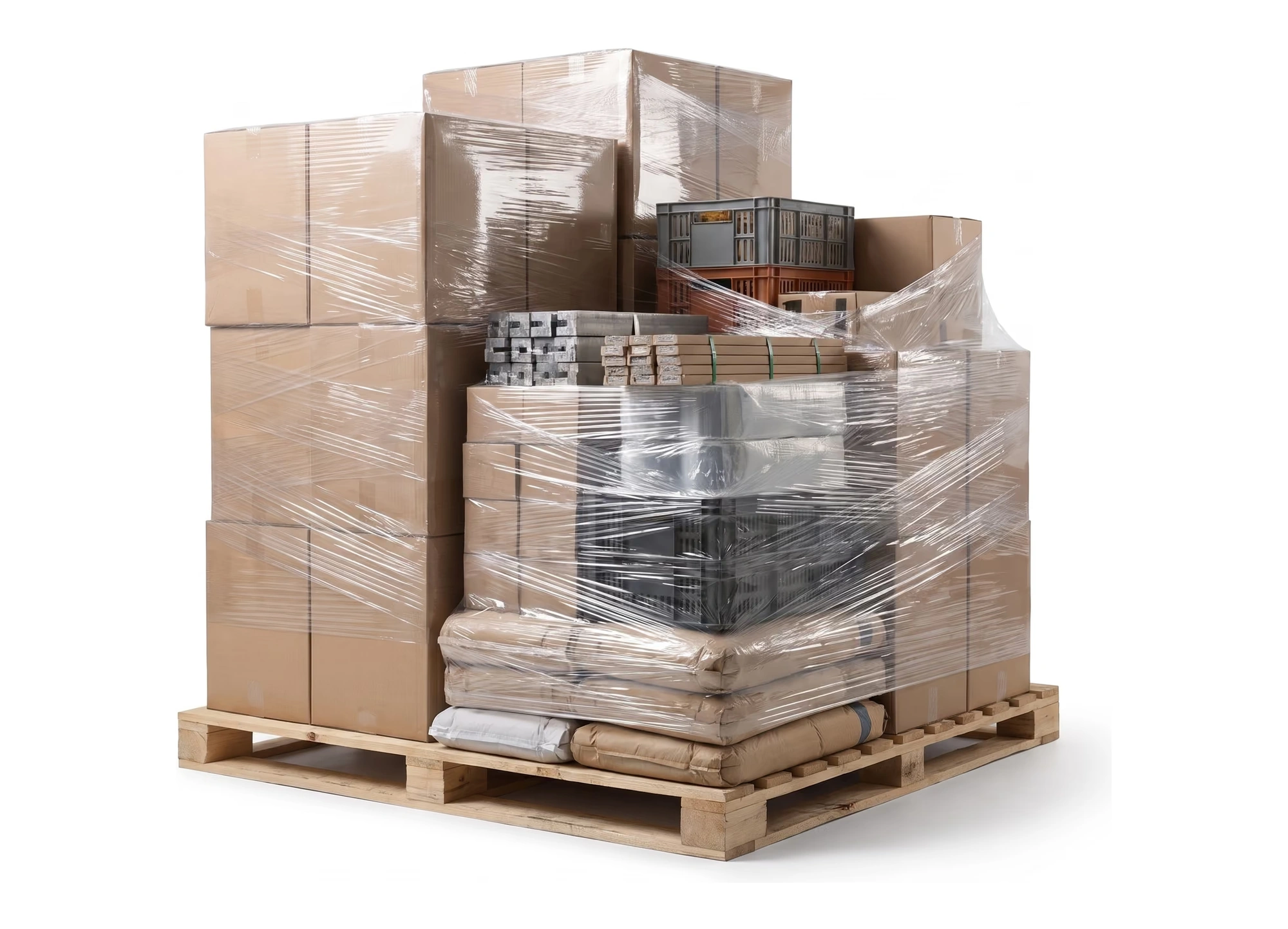
Krovanta's main transport from the UK to Lithuania runs on articulated lorries. For the load plan, pallets and other load units must be stable, and non-standard items need a suitable securing and positioning solution planned in advance.
Part-load freight can travel with other customers' freight if its weight, shape and handling conditions allow space on the lorry to be planned efficiently.
6. The main run leaves on Thursday
Krovanta's main UK→LT run leaves on Thursday. Freight usually reaches Lithuania at the weekend and deliveries to recipients start on Monday.
If the supplier can't get the freight ready by the planned collection, it can be moved to the next run or, where suitable, collected earlier and stored temporarily in the UK warehouse.
7. Final delivery and unloading are planned in Lithuania
Before delivery, we need to know whether the recipient has a forklift or loading dock and whether a lorry can get in. If not, an alternative unloading solution needs to be planned in advance.
If a lorry can't reach the final address, a smaller vehicle can be used for the last leg. Krovanta can also arrange handling to suit the specific freight and site.
What the customer needs to prepare at the start
The more information provided before collection, the fewer unplanned changes there are later. Send us dimensions, weight, photos, addresses, the supplier's contact, handling conditions and commercial documents.
If you'd like us to assess a specific load, start on our commercial freight UK to Lithuania page. This article explains the process; the service page is for enquiries and assessing a specific load.
Frequently asked questions
Answers to the most common questions about this article.


We need the freight dimensions, weight, photos, exact collection and delivery addresses, the supplier’s contact and information about loading and unloading.
Yes. We can arrange several collections and, if needed, consolidate the orders in a UK warehouse.
The main run leaves the UK on Thursday. Freight usually reaches Lithuania at the weekend and deliveries start on Monday.
Yes. For an additional fee we can help arrange UK export and LT import declarations.
In that case a smaller vehicle can be planned for the last leg of delivery.



The services we provide